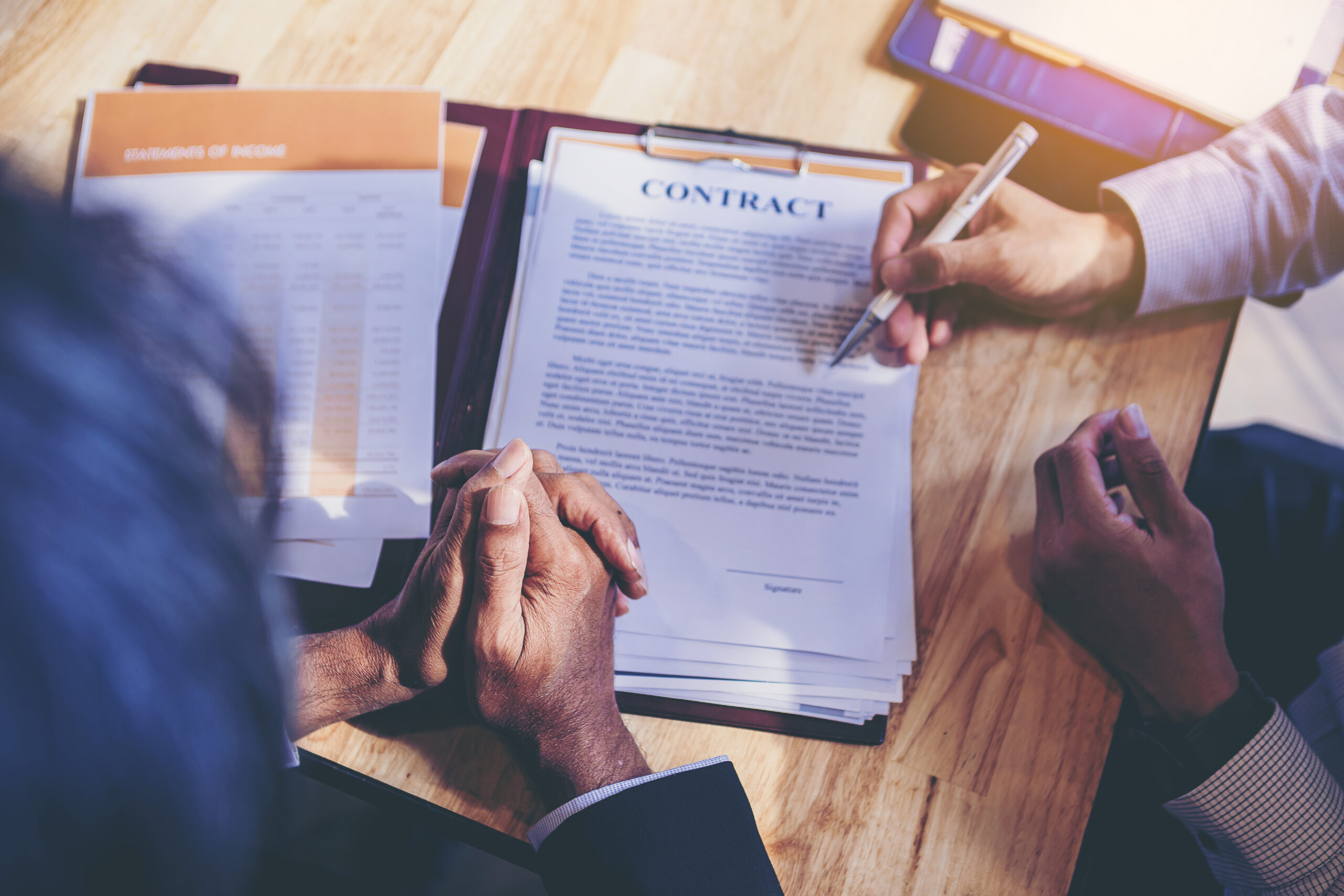
While big multi-syllabic and, dare I say, highfalutin legalese words can certainly make you sound more official, the actual terms of a contract are far more important. It’s easy to get the legal writing wrong, too–some legal terminology doesn’t work like normal English, and to a lawyer, it just gives away the fact that you didn’t hire one yourself and are vulnerable to exploitation by real lawyers.
Let’s dig into some real life examples of this–how and why do the details matter?
Legalese encompasses all of the esoteric language and phrases used by attorneys. While lawyers should be able to write (and even talk) in this language, it doesn’t necessarily mean that Legalese is better than the plain language, as we’ll get into below. (There’s actually an ongoing debate about this in the legal world as a whole, but that’s beyond the scope of our little article here.)
Here’s an example of a Legalese sentence: Respondent’s actions were taken, inter alia, in it’s reasonable business judgment and no court of competent jurisdiction would find such acts to be unreasonable under the law.
Here’s the translation in plain English: The business owner did what they thought was best, given the circumstances they knew of at the time, and therefore should not be punished.
Most contracts are meant to be clear and to cover the majority of situations that may arise to mess up that deal (what we’d refer to in the industry as “contingencies,” or things that could “frustrate the contract”). Obviously, we can’t write an agreement that accounts for every possible situation, since the possibilities are endless, but we can certainly cover the big ones–the things that can/should allow us to get out of the contract or change it.
An easy example is contracts written pre-COVID: Many of them did not include what’s called a “Force Majeure” clause that allows the parties out of the contract, or to renegotiate it, if something crazy and relatively unpredictable happens (shelter-in-place orders, anyone?).
I should probably mention here that many contracts are left intentionally vague, so that lawyers can use the vague language for loopholes. This is not advised, though, unless you really know what you’re doing–it’s a bit like wiring a bomb (or at least, I’d imagine that’s the case!).
Legalese is a special language–things have different meanings than regular English (or even Latin). Some of it’s the same, but it’s not just a “dialect,” it’s too different. As you can imagine, people that haven’t actually learned the language who try and write in that language often get themselves into trouble.
This also happens a lot when someone uses AI or a company like LegalZoom to write their contracts for them, so that they sound official. I often tell my clients that they’d be better off writing an agreement themselves than trying to use AI or LZ, because in using one of those tools, they don’t actually know what’s in the document. At least with a contract you write yourself, you’ll know what everything means, and hopefully, so will the other party that’s signing it.
For example, we had a business owner call in who had hired LegalZoom to write his partnership agreement 2 years prior. His Software as a Service company had just cleared 4.5 million in annual revenue and only had 2 employees (aside from the 2 partners). Tragically, the LZ partnership agreement had a clause in the fine print (that I assume they didn’t read or understand at the time) that allowed the “majority partner” (which was the other guy) to buy out the “minority partner” (which was the guy calling us) for his ownership percentage at “Book Value.”
Book Value is a Legalese term (a “term of art”) that means the value of the hard assets that are “on the books,” which in this case was limited to a few laptops and some depreciated office furniture (about 10,000 dollars). If you take that by the caller’s 49%, he’d be looking at a forced sale of $4,900 for all of his ownership in a company that cleared 4.5 million dollars in the prior 12 months!
Had they just written their partnership agreement themselves, or hired an attorney in the first place and not had AI do it, they would never had to suffer through that tragic contract.
We lawyers make our living on ambiguity. Reading over a poorly-written AI contract makes me salivate–the loopholes, the uncertainties, all of the mistakes are gold for my clients! Most of my job is breaking down contracts that people have, and arguing for the best interpretation for my clients.
Imagine playing a new board game that was missing the rule set. If you’d never played Scrabble before, but saw the pictures, you’d be incentivized (as a player) to game the system. You’d go diagonally, for example, or in reverse, or use proper nouns, or trade letters. Any one of these things would break the game–it wouldn’t accomplish the goal it was designed for. It would get boring quickly. It wouldn’t be fun for very long.
That’s why we need contracts that are specific. Sure, it takes a little extra work, but what you and your friend would agree before a contract is signed can look a lot different once money’s churning through it. What happens if one of us gets sick? What if shipment lanes just stop? What if one of us moves away? What if one partner want to sell their “side” of the contract to a good friend, that they trust, but who you don’t know?
Treat it like your own new board game. Game the system. Look for the loopholes, the ambiguities, where you could interpret a line one way or another, but each way would have very different outcomes. It’s your contract. Let’s get it right!
We mentioned above that there’s a big legal debate over how to write contracts. Since most readers will be non-attorneys, I’m going to argue for writing agreements in their “plain language.”
This means writing more words, covering all the bases. Lots of “if-then” statements. Just write it out like you’re explaining it to a 10 year old. Include anything you can think of that may happen, that would change the agreement. If you start to feel like it’s too much, you can make a catch-all provision that says something like: “if something major happens, we will agree to renegotiate this agreement, and may elect to stop it altogether.” You still have to consider who would want to back out, though–who would benefit the most from having that option.
No, not really. More is typically more with contracts, especially if you’re not represented by a lawyer. The tradeoff is that the other side might not want to read the whole thing, if it’s too lengthy from all of the specifics you wrote down. If that’s the case, I find that most people are happy to sign a “click through agreement” online, where there’s a link to a contract that they can click on and review at any time, but they can sign it without taking the time required to read it. If they take that risk, it’s on them.
Ultimately, having an expert that knows legalese and can use it to your advantage can save you time, money, and risk. Think about the example, above, of the new business partner with the company that cleared 4.5 million in annual revenue. Everyone was friendly, when that partnership began. No one had bad intentions (or if they did, they hid it so well that the other side didn’t know), but the contract made the outcome disastrous. It’s the wild west out there, still, and you have no way of knowing what you’re risking.
We’d be more than happy to take your call at Sparks Law. We pride ourselves on our responsiveness and our experience. Get in touch today to see how we can help your business form contracts that will keep your interests protected.